ProjectManagementOER
Learning Objectives
By the end of this unit, you should be able to:
- Identify a project and list the main characteristics that make it a project
- Distinguish a project from a program and routine operations
- Understand why project management (PM) is crucial in today’s world
- Appreciate the various disciplines involved in managing a project
What is a Project?
According to the Guide to the Project Management Body of Knowledge (PMBOK), a project is a temporary endeavor undertaken to create a unique outcome (product, service, or result).
Breaking this definition down, a project is any activity that has the following characteristics:
- Has an established/specific objective
- Has a defined life span with a beginning and an end
- Involves several departments and professionals (multidisciplinary and complex): in fact, the whole idea of project management is managing the complexity arising from the multidisciplinary nature of projects
- Has customers or stakeholders with conflicting interests: This in turn adds to the complexity in priorities
- Involves doing something never been done before meaning the outcome is uncertain: it may have been done in a different context, with other stakeholders, but not in the exact same way and in a repeatable manner.
- Has specific time, cost, and performance requirements (constraints and measures of success)
- May be part of a program
A project ends when the objectives are achieved, when time runs out or when it is abandoned.
Examples of projects are designing a new course, or creating a youtube video to define projects.
Project Success
Owing to their interdisciplinary nature, project success can be defined in many different ways and based on various metrics, some of which may be project specific.
In project management literature, we typically focus on the triple constraints:
- Time: From its start, a project is time-bound with a defined end date.
- Cost: Most projects have a fixed pre-defined budget when they begin.
- Scope/Performance: Most projects define what is to be achieved at the start of the project, or how well it is achieved.
Note how these three are related: if you increase the scope (say you add a new feature), then you will likely increase the time it takes to complete the project and the cost of the project. In most cases, these three constraints are not of the same degree of importance to the project sponsor, the entity who is funding the project. A part of project management is understanding the level of flexibility in each of these areas. Some argue that how well you meet the time, cost, and scope constraints then defines the quality of the project, a 4th constraint.
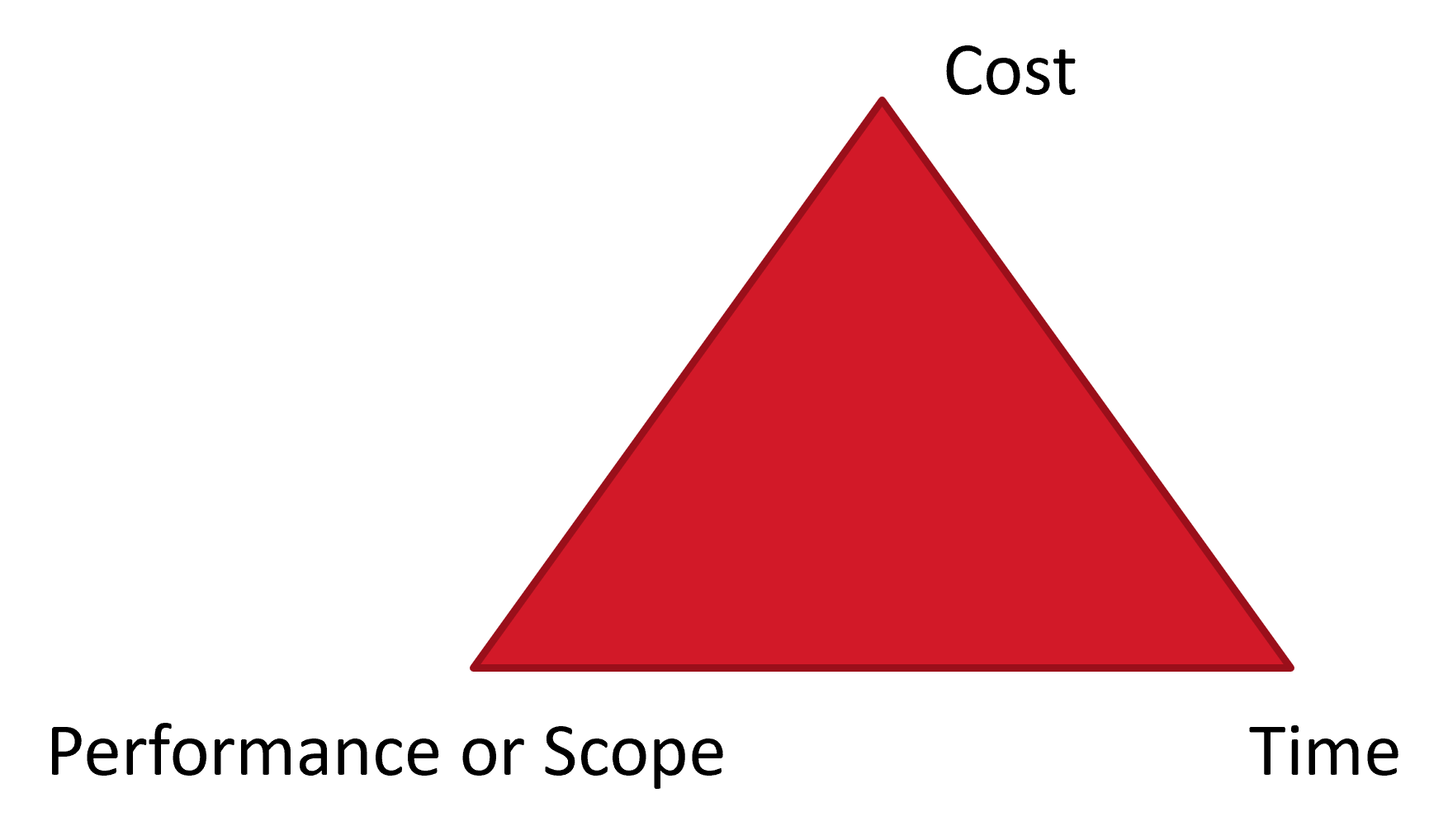
Example: Triple Constraint in Action Let’s assume we are developing a registration system. You originally plan to develop a basic web registration features in 8‑month schedule for CAD 250,000. Midway through the project, the sponsor requests additional features such as automated wait-lists and conflict checking. If you accepts the extra scope without adjusting schedule or budget, they will likely increase risk and reduce quality. If you adjust the plan (for example, extend the schedule to 9 months and increase the budget by CAD 30,000), you maintain realism but must manage stakeholder expectations.
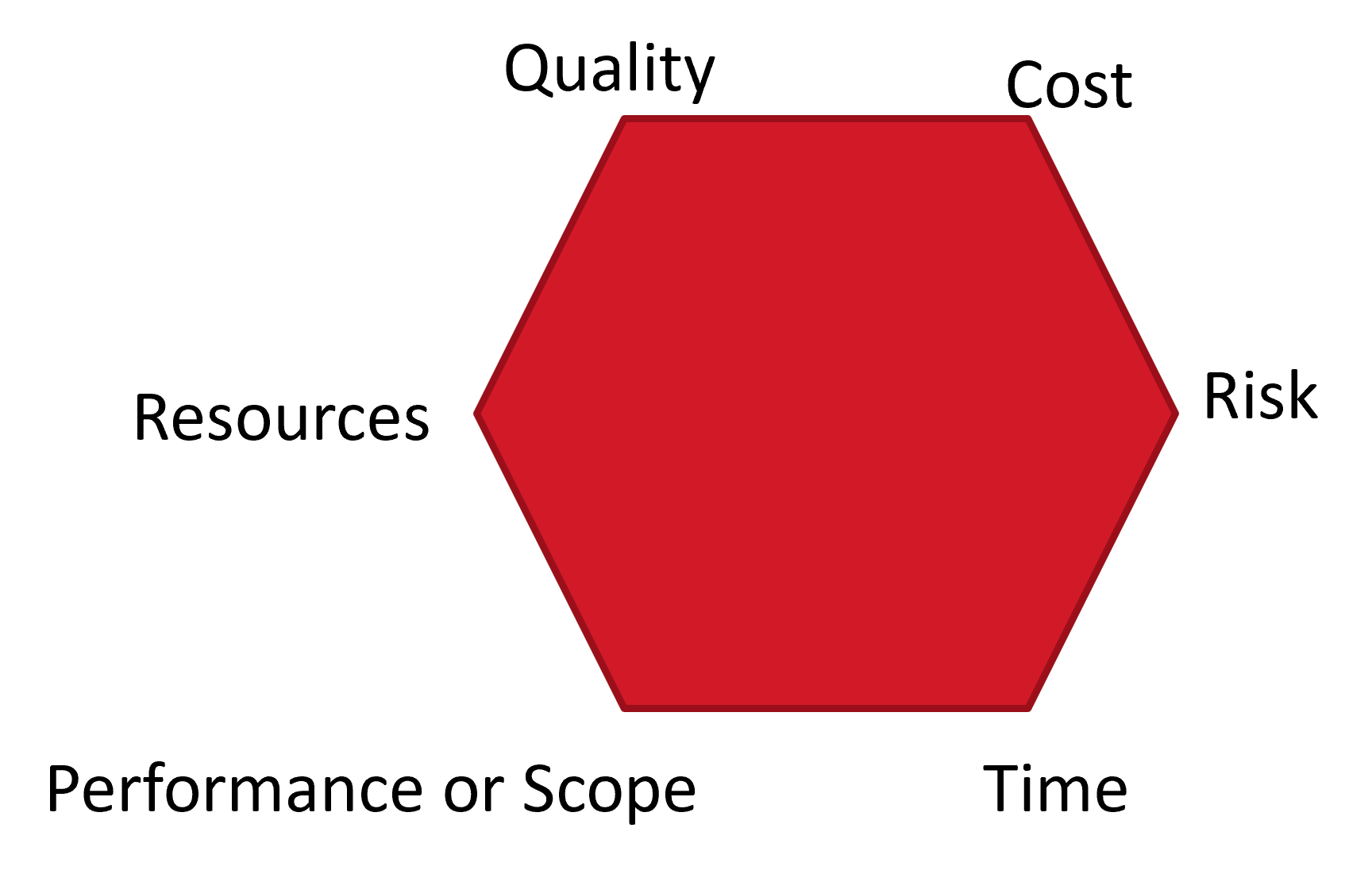
Depending on the nature of the project, additional project-dependent constraints may need to be considered. Examples of these include:
- Alternative routes: whether the project has explored alternative solutions to a problem
- Customer satisfaction: how happy the customer is with the outcome
- Risk: whether the risk level is within a threshold defined by the customer
- Resources: whether resources are efficiently utilized by the project
Like scope, time and cost, these project-specific constraints may not be of the same level of important. As the project progresses, the project manager needs to balance these constraints: in essence, the project is like a rubber sheet, being pushed in different directions by these constraints, balance by the project manager.
Role of Projects in Organizations
Projects do not happen in a vacuum! They are part of a larger set of activities in any organization.
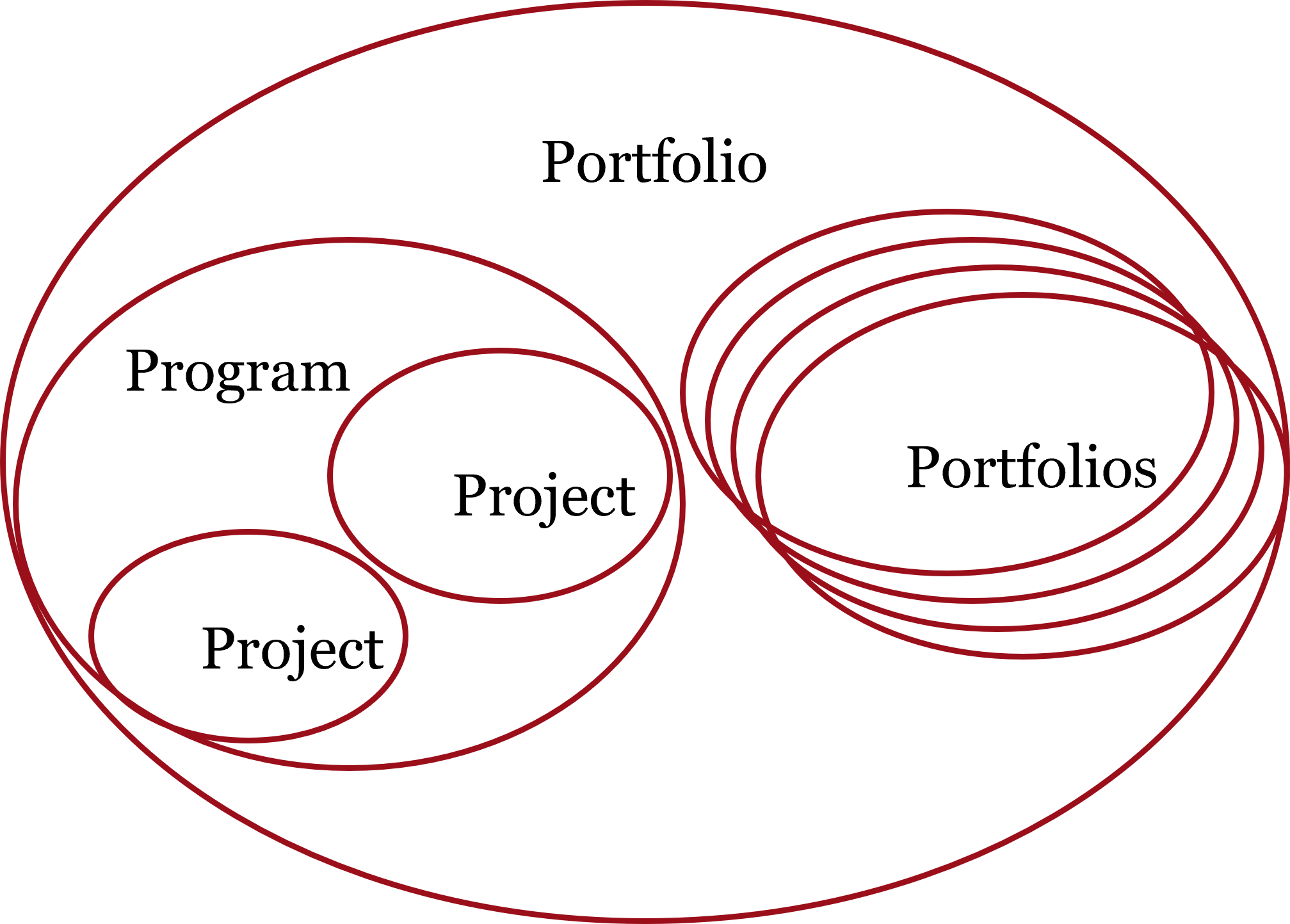
Generally speaking, an organization’s activities encompass the following:
- product: A quantifiable item or service created to meet customer needs, which can be physical (like a building), digital (like an app), or a combination. It is meant to deliver continuous value throughout its life-cycle.
- Project: A temporary endeavor undertaken to create a unique product, service or result. Designing the app, or constructing the building may be considered projects (or programs depending on complexity).
- Program: A group of related projects managed in a coordinated manner over an extended period of time to accomplish common goals not available from managing them individually. Usually programs are created to help manage a very large scope, which could be managed better as separate projects as opposed to a large single project.
- Operations: Ongoing and repetitive activities that is continuous without an ending date and with the same processes repeated to produce the same results.
- Portfolio: A collection of projects or programs or other work grouped together to facilitate effective management of work to meet strategic business objectives.
Example 1: Designing and launching an online course registration system for College X is a project: it is temporary, has a defined start and end, and produces a unique product (the registration system). Running the college’s registration desk every semester is operations: ongoing, repetitive work that keeps the institution functioning. A multi‑year “Student Experience Improvement” initiative that includes the registration system, a new advising service, and a mobile app is a program: a coordinated set of related projects managed together to achieve benefits that wouldn’t be achieved if the projects were managed separately. The institution’s overall set of digital initiatives, capital projects, and operational improvement projects can be grouped into one or more portfolios aligned to its strategic objectives.
## Case Study: Active Transportation Program
A mid‑sized Canadian municipality launches an **Active Transportation Program** to improve cycling infrastructure:
- The overall program includes several corridor projects (e.g., downtown bike lanes, university‑district routes). - Day‑to‑day road maintenance remains an **operation**, while each corridor upgrade is a **project**. - The program is part of a wider **portfolio** of mobility, climate, and infrastructure initiatives.
This case can be used throughout the course to illustrate how projects, programs, and portfolios coexist in public organizations.**
An organizations vision and mission, are translated to a corporate strategy and objectives on regular basis (annually in most cases). These strategies and objectives are then either assigned to specific operations, or to portfolios. These portfolios then assign these goals to lower level portfolios and high level programs, who in turn assign them to specific projects or products.
Top-down, the following information is defined and communicated to lower level projects, programs and portfolios:
- Strategies & priorities
- Progressive elaboration
- Governance
- Disposition on requested changes
- Impacts from changes in other portfolios, programs or projects
In return, lower level projects, programs and portfolios communicate the following information to higher levels:
- Performance reports
- Change requests with impact on other portfolios, programs or projects
Based on PMBOK Guide 5th ed. and Process Groups: A Practice Guide, these are the features of these projects, programs, portfolios and products:
| Projects | Programs | Portfolios | Products | |
|---|---|---|---|---|
| Duration | Short-term, temporary | Long term | Long term | Long term |
| Scope | Projects have defined objectives. Scope is progressively elaborated throughout the project life cycle. | Programs have a larger scope and provide more significant benefits. Provide agregate benefits delivered through multiple components. | Portfolios have a business scope that changes with the strategic goals of the organization. | Products are customer focused and benefits driven. |
| Change | Project managers/teams expect change and implement processes to address the changes, as needed. | The program manager must expect change from both inside and outside the program and be prepared to manage it. Program teams explore changes and adapt to optimize the delivery of benefits. | Portfolio managers continually monitor changes in the broad environment. | Product teams explore changes to optimize the delivery of benefits. |
| Planning | Project managers progressively elaborate high-level information into detailed plans throughout the project life cycle. | Program managers develop the overall program plan and create high-level plans to guide detailed planning at the component level. | Portfolio managers create and maintain necessary processes and communication relative to the aggregate portfolio. | |
| Management | Project managers manage the project team to meet the project objectives. | Program managers manage the program staff and the project managers; they provide vision and overall leadership. | Portfolio managers may manage or coordinate portfolio management staff. | |
| Success | Success is measured by product and project quality, timeliness, budget compliance, and degree of customer satisfaction. | Success is measured by the degree to which the program satisfies the needs and benefits for which it was undertaken. | Success is measured in terms of aggregate performance of portfolio components. | Success is measured by the ability to deliver intended venefits and ongoing viability for continued funding. |
| Monitoring | Project managers monitor and control the work of producing products, services or results that the project was undertaken to produce. | Program managers monitor progress of program components to ensure overall goals, schedules, budget, benefits will be met. | Portfolio managers monitor aggregate performance and value indicators. | |
| Funding | Funding is largely determined up front based on the ROI projections and initial estimates. Funding is updated based on actual performance and change requests. | Funding is up front and ongoing. Funding is updated with results showing how benefits are being delivered. | Product teams eengage in continuous development via funding development blockjs and reviews of value delivery. |
How is Project Management Different from General Management (Operations)?
| Dimension | Project Management | General Management | |—|—|—| | Type of work activity | Unique | Routine | | Management approach | Ability to adapt to change | Manage by exception | | Planning | Critical | Important | | Budgeting | Start from scratch, multiple budget periods | Modify budget from previous budget period | | Sequence of activities | Must be determined | Often predetermined | | Location of work | Crosses organizational units | Within an organizational unit | | Reporting relationships | Informal | Well defined |
Project Management is on the Rise
Many factors have led to the increase in interest in project management. These include:
- Need for speed, market responsiveness, and product flexibility
- Compression of the product life cycle
- Knowledge and technology explosion
- Triple bottom line (planet, people, profit)
- Increased customer focus
- Small projects represent big problems
- Growing demand for a broad range of complex goods and services that require broader areas of knowledge in development
- Increased worldwide competition
- Management’s inability to understand and control large numbers of activities
Process Groups: A Practice Guide highlights actors that lead to projectization as follows:
| Factor | Need to meet Regulatory, Legal, or Social Requirements | Create, Improve, or Fix Products, Processes, or Services | Implement or Change Business or Technological Strategies | Satisfy Stakeholder Requests or Needs |
|---|---|---|---|---|
| New technology | X | X | ||
| Competitive forces | X | |||
| Material issues | X | X | ||
| Political changes | X | |||
| Market demand | X | X | X | |
| Economic changes | X | |||
| Customer request | X | X | ||
| Stakeholder demands | X | |||
| Legal requirement | X | |||
| Business process improvement | X | |||
| Strategic opportunity or business need | X | X | ||
| Social need | X | |||
| Environmental considerations | X | X |
Project Management: The Role and the Skills
A project manager plays various roles in a project:
- Facilitator and communicator: a key function, as the project manager facilitates the project team, and is the link to external stakeholders
- Manages temporary, non-repetitive activities and frequently acts independently of the formal organization
- Gathers resources for the project and uses them productively
- Creates and nurtures multidisciplinary teams
- Must induce the right people at the right time to address the right issues and make the right decisions
- Must be aware of strengths in self and others
- Concerned for well-being of self and team
- Is the direct link to the customer and focuses on customer requirements
- Works with a diverse troupe of characters interdisciplinary coordination (needed due to expansion of knowledge and complexity)
- Provides direction, coordination, and integration to the project team
- Is responsible for performance and success of the project, focusing on objectives (scope, cost, time) and consistent achievements
- Respond to rapid changes (such as market)
- Attentive to business goals, client goals and project goals
- Follows best management practices
You can think of a project manager as an orchestra conductor or a mini-CEO. They need to manage a set of related activities, activities that they may not be an expert in. They need to know how to engage and motivate the team, how to translate information to what team members with different skills understand, and how to manage different aspects of a project.
Project managers are usually generalists. They rarely decide who performs each task, because they are not an expert on every task. As a result, they also lack the technical skills to evaluate much of the work performed on a particular project and exercise control very little over most aspects of the work that gets performed on the project.
What amazes many students, is that many project managers are not necessarily trained or destined to be project managers. Some call project management an accidental profession. Individuals with training in a specific domain (say engineering, marketing, etc) are asked to rise up to manage projects. In most cases, they are selected due to their personality traits, motivation and willingness to manage projects. The idea is that their knowledge, skills and abilities in project management can be developed over time.
Generally, a project manager needs knowledge, skills and abilities in:
- Interpersonal skills
- General management knowledge and skills: Communication, influence, leadership, motivation, negotiation and problem solving
- Understanding the project environment: Cultural, social, political, international, physical
- Application area knowledge, standards and Regulations: Industry knowledge, technical specialty, and managerial knowledge
- Product development processes
The knowledge project managers need has been standardized over the years by the Project Management Institute. The Project Management Body of Knowledge covers a range of topics as it related to project management.
Principles of Project Management
PMBOK Guide 7th ed. lists the following 12 core principles for project management:
- Be a diligent, respectful, and caring steward
- Create a collaborative team environment
- Effectively engage with stakeholders
- Focus on value
- Recognize, evaluate, and respond to system interactions
- Demonstrate leadership behaviors
- Tailor based on context
- Build quality into processes and deliverables
- Navigate complexity
- Optimize risk responses
- Embrace adaptability and resiliency
- Enable change to achieve the envisioned future state
These principles guide your behavior in the 8 project performance domains:
- Stakeholders
- Team
- Development Approach and Life Cycle
- Planning
- Project Work
- Delivery
- Measurement
- Uncertainty
Summary
Practice
Bibliography
The following sources were also consulted in creating this resource: